

Sceye and Softbank In The Haps Partnership For Japan
1. This Partnership Is About More than just Connectivity
When two companies with different backgrounds which include a New Mexico-based an aerospace company with a stratospheric location and one of Japan's top telecoms conglomerates — come together for a nationwide network of high-altitude platform stations, the story is bigger than broadband. What's happening with the Sceye SoftBank partnership represents a legitimate bet on the stratospheric system becoming a lasting, revenue-generating layers of telecommunications across the nationand not just a pilot project or a proof idea, but rather the beginning of an actual commercial rollout that has a specific timeline and a national-scale goal.
2. SoftBank Has a Strategic Reason to invest in Non-Terrestrial Networks
the SoftBank's concern for HAPS didn't come from a vacuum. Japan's geography – thousands of islands, mountains, and coastal regions frequently battered by typhoons and earthquakes is a source of continuous coverage gaps that the ground infrastructure alone won't be able to fill. Satellite connectivity improves coverage, but delays and costs remain as limiting factors for mass market applications. A stratospheric platform that is 20 km, which is able to hold position over certain regions and offering high-speed broadband with low latency to ordinary devices, addresses a variety of these problems simultaneously. For SoftBank, investing into stratospheric systems is a logical extension of an existing strategy to diversify the network beyond terrestrial dependency.
3. Pre-Commercial Services Planned for Japan by 2026. Signify Real Momentum
One of the main points that differentiates this announcement from previous HAPS announcements is the goal of commercial pre-commercial services in Japan at the end of 2026. That's not a vague future promise, it's a specific operational goal with infrastructure, regulatory and commercial implications to it. As they move towards precommercial status, the platforms must perform station keeping consistently, delivering reliable signal quality, as well as communicating with SoftBank's network structure. The way this date has been announced publicly suggests each party has cleared enough technological and regulatory hurdles to consider it a real-world goal instead of aspirational marketing.
4. Sceye provides endurance and payload Capacity That Other Platforms Struggle to Match
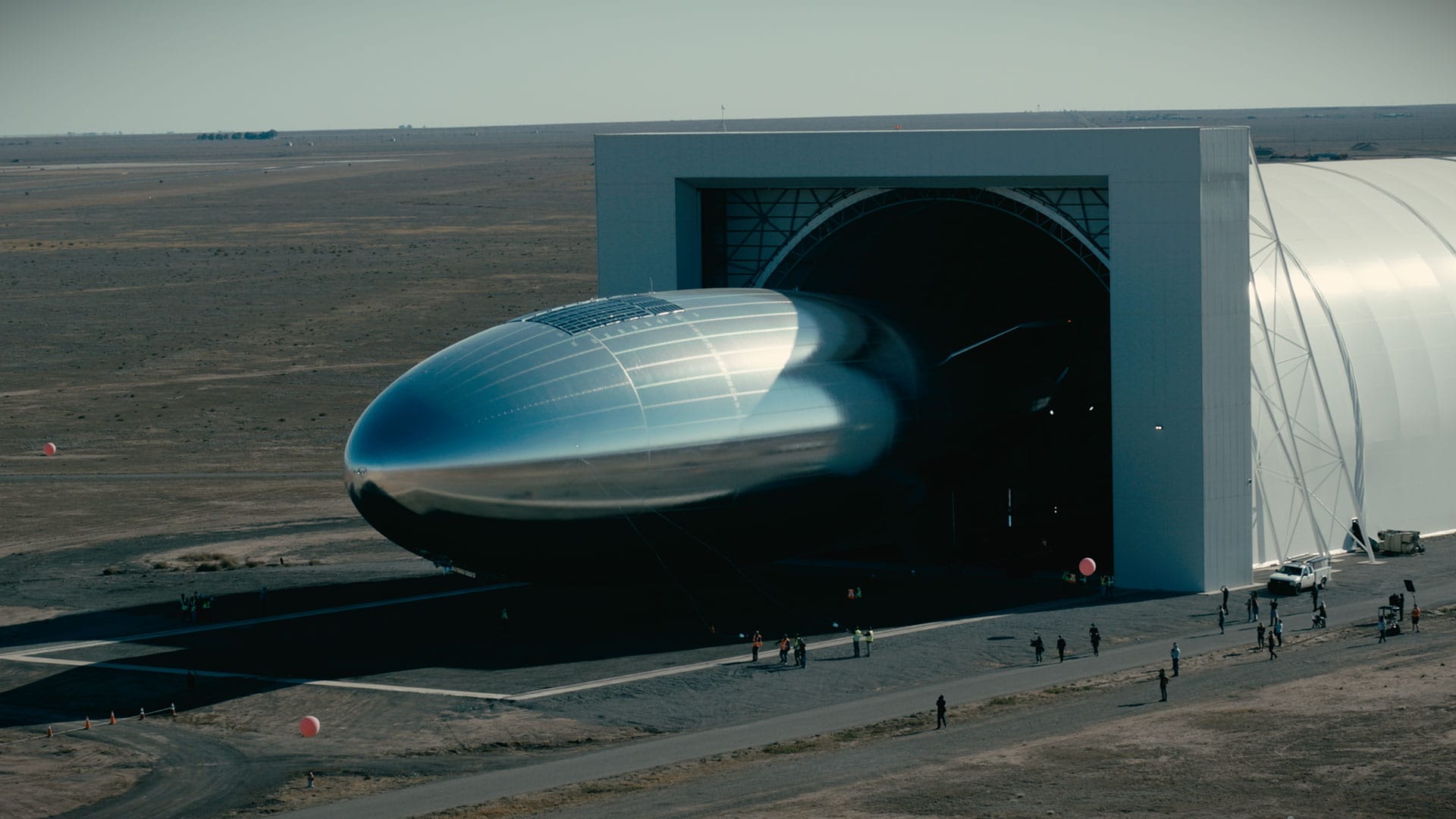
Not every HAPS vehicle can be used to support a commercial network that spans the nation. Fixed-wing solar aircraft typically trade up payload capacity for speed at altitude. This limits how much telecommunications or observation equipment they can carry. Sceye's airship design that is lighter than air follows an alternative approach — buoyancy takes the burden of the vehicle which means the available solar energy is used for propulsion, station keeping, and providing power to onboard devices instead of simply being in a position to stay aloft. This architectural decision translates into substantial advantages in payload capacity as well as mission endurance and both are crucial enormously when you're trying to keep a continuous supply of power over dense regions.
5. This Multi-Mission capability of the Platform makes the Economic Work
One of the most under-appreciated aspects of the Sceye approach can be that the single system does not need to justify its operation costs solely through telecoms revenues. The same vehicle which provides stratospheric internet can also house sensors for monitoring greenhouse gas emissions as well as disaster detection Earth observation, and disaster detection. In a country such as Japan who is at a high risk for natural hazards and has national commitments in monitoring emissions and monitoring, this multi-payload design can make the infrastructure a lot easier to justify at the government as well as a commercial level. The antennas for telecoms and climate sensor aren't competing -they're part of a system that's already established.
6. Beamforming in conjunction with HIBS Technology Let the Signal be Commercially Usable
Being able to deliver broadband over 20 kilometres can't be as simple as throwing an antenna downward. The signal needs to be directed, shaped, and managed dynamically to support users efficiently across a large geographical area. Beamforming technology allows the stratospheric telecommunications antenna to direct energy towards those who are in the greatest need, instead of broadcasting at a uniform rate and losing capacity on empty landscapes, or oceans that are not inhabited. Together with HIBS (High-Altitude IMT Base Station) standards that make the system compatible with the existing 4G or 5G device ecosystems, ordinary smartphones can connect to the internet without specialized equipment, a vital need for any mass-market installation.
7. The Japan's Island Geography Is an Ideal Test Case for the World
If stratospheric connectivity operates at an accelerated rate in Japan the model becomes easily exportable to other nations having similar challenges in coveragewhich is a majority nations around the world. Indonesia is one of them. The Philippines, Canada, Brazil and many Pacific island nations have variations of the same problem which is the spread of people across terrain that is in opposition to traditional infrastructure economics. Japan's combination and regulatory capabilities, as well as an actual need for geography provides it with the highest test ground for the nation-wide network that is built on stratospheric platforms. It is likely that what SoftBank and Sceye demonstrate will serve as a model for deployments elsewhere over the next few years.
8. There is a reason why the New Mexico Connection Matters More Than It Appear
Sceye operating from New Mexico isn't incidental. New Mexico offers high-altitude test conditions, an established airspace facilities, and airspace suitable for the type of extended flight testing that vehicle development demands. Being one of the most serious aerospace firms operating in New Mexico, Sceye has constructed its development program in an environment that supports genuine engineering iterations instead of press release cycles. The difference between announcing a HAPS platform and actually maintaining one for weeks at an time is huge, along with the New Mexico base reflects a company which has been doing the unglamorous work required to close that gap.
9. Founder Vision is the primary driver behind the Partnership's long-term goals
Mikkel Vestergaard's career path and experience in applying technology for environmental and humanitarian challenges — has visibly contributed to the vision Sceye is trying to build and the reasons. The collaboration with SoftBank isn't solely a commercial telecoms-related play. The platform's emphasis at disaster prevention and monitoring at a real-time pace, and connectivity for underserved regions reflect a fundamental belief that stratospheric infrastructure should serve various social, as well as commercial ones. This stance has probably made Sceye a more compelling partner for a company such as SoftBank, which is in a strict regulatory and public context where corporate mission is a significant factor.
10. 2026 will be the year that to be Stratospheric Tier either Proves Itself or Resets Expectations
The HAPS sector has been promising commercial deployment for longer than most observers care to remember. What is unique about these timelines Sceye and SoftBank timetable so important is that it attaches to a specific nation, a specific operator, and also a certain service milestone to a certain year. If commercial pre-commercial services in Japan launch on schedule with the required performance 2026 is an era when the stratospheric internet has moved from promising technology, to working infrastructure. If the infrastructure fails to function, the sector will face harder questions as to whether the engineering problems can be solved according to recent statements. It doesn't matter, the collaboration has put a mark in the sky worth watching. Follow the most popular sceye careers for site tips including what are haps, Stratospheric infrastructure, sceye connectivity solutions, Sceye Inc, what are high-altitude platform stations, Stratospheric broadband, sceye haps airship specifications payload endurance, detecting climate disasters in real time, aerospace companies in new mexico, softbank satellite communication investment and more.
SoftBank'S Haps Pre-Commercial Services: What To Expect In 2026
1. Pre-Commercial Is a Specific and significant Milestone
The language used here is important. Pre-commercial service is particular phases of development of any brand new communications infrastructure — beyond experimental demonstration, beyond proof-of-concept flight campaigns, and then into the areas where real users enjoy real-time service, under conditions that mimic what a fully commercial implementation would look like. This implies that the platform has been stable, the signal is in line with quality requirements that the actual applications rely on, the ground infrastructure has been interfacing with the spheric telecom antenna appropriately, and the required regulatory security clearances are in the right place to provide service to areas that are densely populated. The achievement of pre-commercial status is not a milestone for marketing. It's an operational milestone, which is why the announcement that SoftBank has made a public commitment to reaching that status by 2026 in Japan in 2026, sets an example for the engineering both sides of the partnership needs in order to get over.
2. Japan is the best country to Begin This Challenge
Choosing Japan as a place to conduct Pre-commercial stratospheric space isn't made up of a. Japan is home to a range of characteristics that make it perfect for a first deployment site. The terrain- mountainous terrain and inhabited islands with thousands along with long and intricate coastlines -pose genuine issues with coverage that stratospheric technology is designed to solve. The regulatory environment it operates in is sophisticated enough to address the spectrum and airspace concerns which stratospheric operations can raise. The existing mobile network infrastructure and services, owned by SoftBank, provides the integration layer that the HAPS platform requires to connect to. And its inhabitants have the device ecosystem and the digital literacy required to access stratospheric broadband services, without the need for the time to adopt technology that can delay significant uptake.
3. Expect the initial coverage to focus in areas that aren't served or Strategically Important Areas
Pre-commercial deployments aren't designed to provide coverage across the entire country at once. More likely, it's one-off deployment that focuses on areas where the gap between the existing coverage and what the stratospheric network will provide is the greatest and also where the strategic importance of prioritizing coverage is strongest. In Japan's perspective, that is the case for island communities that are currently dependent on expensive and limiting broadband satellites, mountainsides areas of rural where the economics of terrestrial networks have not been able to support adequate infrastructure, also coastal zones for which resilience to disasters should be a top priority due to the risk of typhoon and seismic exposure in Japan. These areas are the clearest demonstration of stratospheric connectivity's advantages and efficient operational data to help refine coverage, capacity, as well as system management prior to expanding rollout.
4. Its HIBS Standard Is What Makes Device Compatibility Possible
One of the questions anyone is likely to ask about stratospheric broadband will be whether or not it needs special receivers or works with conventional devices. What is known as the HIBS Framework is High-Altitude IMT Base Station -provides a standards-based answer to that question. By conforming to IMT standards that underpin 5G and 4G networks across the globe, a stratospheric platform operating as a HiBS is compatible with the device and smartphone ecosystem already operating in the coverage area. for SoftBank's prior-commercial services this means that users who reside in coverage areas should be able to connect to the stratospheric internet using their existing devices without the need for hardware. This is an essential need for any application that hopes to reach the masses as well as those living in remote regions, who require alternatives to connecting and are not able to afford the expensive equipment.
5. Beamforming will determine how well Capacity Is Dispersed
The stratospheric coverage of the entire area doesn't provide a uniform amount of useful capacity throughout the footprint. The manner in which the spectrum available and signal power is allocated across the coverage area dependent on beamforming capabilities — the ability of the platform to direct signals toward areas locations where demand and users are most concentrated rather than broadcasting throughout the entire geographic area, which includes vast areas of land that aren't being used. For SoftBank's first commercial phase evidence that beamforming via an ultraspheric broadband antenna can effectively provide commercially feasible capacity to certain population centers within a vast coverage area will be equally important as demonstrating the coverage area. Broad coverage area with a tiny, unusable capacity will prove little. Intentional delivery of real useful broadband to defined service areas proves the commercial model.
6. 5G Backhaul Services Could Precede Direct-to-Device Services
In some scenarios, one of the earliest and most simple ways to test the application of stratospheric connections isn't direct-to-consumer broadband but rather 5G backhaul that connects existing ground infrastructure in regions where terrestrial broadband is inadequate or is not available. A remote community could have the basic network equipment, but may not have the high-capacity connection to the greater network which is what makes it useful. The stratospheric technology that provides that backhaul link can provide functional 5G coverage for communities serviced by ground equipment that is already in place without making it necessary for users to interact directly with the stratospheric network. This usage scenario is much easier for engineers to evaluate technically, and provides concrete and quantifiable value and provides operational certainty in operating performance of the platform prior to adding the more complex direct-todevice service layer is included.
7. Sceye's Platform Performance in 2025 Sets The Stage for 2026.
The goal of pre-commercial services for 2026 largely depends on what it is that the Sceye HAPS airship achieves operationally in 2025. Testing of station keeping, the performance of payloads under real stratospheric conditions, the behavior of the energy system across a variety of diurnal periods, and the integration testing that is required to confirm it is working with SoftBank's networks must be completed before commercial service can be offered. Updates on Sceye Airship status for HAPS until 2025 therefore aren't just minor updates, but are the most important indicators to determine whether or not the landmark of 2026 has been tracking on schedule or accumulating the type or technical debt that pushes commercial timelines further out. Engineering progress in 2025 will determine the 2026 story being planned in advance.
8. Disaster Resilience Will Be a Tested Capability, Not A Claimed One
Japan's exposure to natural disasters mean that any service pre-commercially stratospheric operating in Japan will likely encounter situations — storms, earthquakes, disruptions to infrastructure — that challenge the service's reliability and its usefulness as an emergency communications infrastructure. This isn't just a matter on the use context. This is one of the finest features. A stratospheric infrastructure that can maintain a stations and provides access to connectivity and observation during the midst of a major earthquake or weather event in Japan illustrates something that no amount of controlled test can replicate. The SoftBank Phase prior to commercialization will provide tangible evidence of how the stratospheric infrastructure functions in the event of a disruption to terrestrial networks — exactly the type of evidence that other potential operators in areas that are vulnerable to disasters must be able to see prior to committing to their own deployments.
9. The Wider HAPS Investment Landscape Will React to What Happens in Japan
The HAPS industry has attracted meaningful investment from SoftBank and other companies, however the broader telecoms & infrastructure investment community remains in a tense state. Large institutions, national telecoms operators in other countries and the governments evaluating the an infrastructure that is stratospheric for their surveillance and coverage requirements monitor what is happening in Japan with considerable attention. A successful launch of precommercial infrastructure -platforms on stations and services that are operational, as well as the performance metrics that meet thresholdscan accelerate investment decisions across the industry in ways that ongoing demonstration flights or announcements about partnerships are not able to. In contrast, major delays or performance shortfalls will prompt the recalibration of timelines across the entire industry. The Japan deployment has a significant impact in the overall stratospheric communication sector, not just for Sceye SoftBank. Sceye SoftBank partnership specifically.
10. 2026 Will Show Us Whether Stratospheric Connectivity has crossed the Line
There's a distinction in the development of any transformative infrastructure technology between a stage in which it's promising, and the point at which it's a real. Mobile networks and the internet infrastructure all crossed this line at specific times -and not just when this technology first tested but rather when it was beginning to function reliably to have institutions and citizens planning around its existence rather than their potential. SoftBank's initial commercial HAPS offerings in Japan represent the most trustworthy immediate scenario when the stratospheric Internet crosses that line. How long the platforms last throughout Japanese winters, whether beamforming delivers adequate capacity to island communities, and whether they are able to operate under the type of weather conditions Japan often encounters, will determine whether 2026 will be remembered as the year the stratospheric internet became an actual infrastructure or if the timeline was rewritten. View the top sceye haps project status for website info including softbank sceye partnership haps, softbank pre-commercial haps services japan 2026, what is a haps, non-terrestrial infrastructure, softbank haps, detecting climate disasters in real time, Cell tower in the sky, Solar-powered HAPS, Sceye Inc, aerospace companies in new mexico and more.
